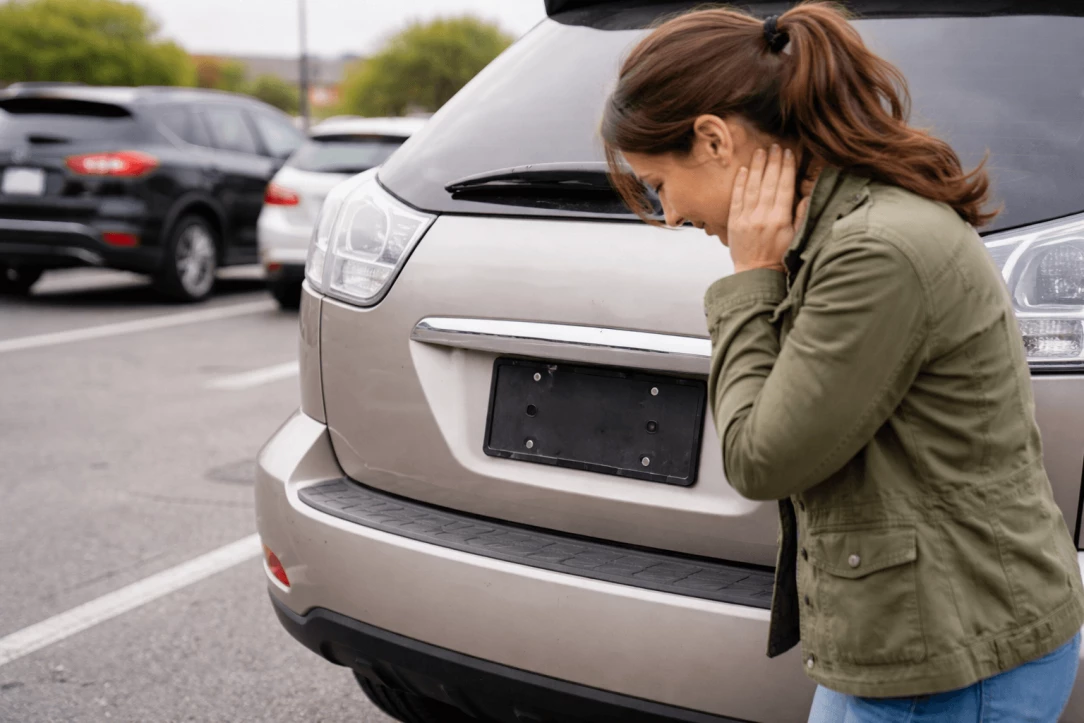
If you find your license plate stolen, immediately document the loss, file a police report, notify toll and parking agencies, and apply for a replacement through your DMV.
Acting quickly helps prevent fines, identity confusion, and registration issues. You’ll protect your vehicle record, stop surprise bills, and get a legal replacement mounted securely so the problem doesn’t repeat.
How to Confirm Your License Plate Was Stolen
Check both mounting points in good light, then scan the ground nearby in case it slipped off. Match what’s missing to your paperwork so you can state the exact number and expiration. A vehicle history report can support the vehicle description and timing. If it’s not there, treat it as theft and document it.
- Photograph the empty bracket, broken fasteners, and any damage around the holes.
- Note the address, time window, and whether the vehicle was in a garage or street spot.
- Confirm the plate number and VIN from your documents.
- Ask nearby businesses about cameras and save screenshots quickly.
Physical Signs of Theft vs Accidental Loss

You’re behind the car, unsure whether someone stole the plate or it fell off. Scratches around screws or tool marks suggest theft. A clean bracket with missing bolts and no scuffs often points to vibration or corrosion. If the bracket is solid and flat, you can usually replace only the plate and fasteners. If the frame is cracked or rusted through, replace the frame hardware too.
Temporary license plates or a temporary tag are paper or plastic tied to your registration record. They’re often valid for 7–30 days, with limited extensions. Follow the placement rule so it stays readable.
To prevent repeat theft, use security screws and a locking frame, plus a thread-locker so vibration doesn’t loosen hardware. License plates may also be protected by parking choices, like backing close to a wall. If plates are lost due to hardware failure, replace worn inserts and re-tighten after a week.
It’s common for a stolen plate to generate 5–15 automated toll or camera hits before the owner notices, especially in commuter corridors.
What To Do First: The Legal Order of Operations
Take photos, open a case with the police, notify toll and parking companies, then replace the plate through your dmv office or online portal using the same details throughout. For smoother reporting and fewer delays across agencies:
- Note exactly when you last saw the plate.
- Save a photo of your remaining plate (if one is left).
- Record the parking zone, permit number, or meter ID where the vehicle was left.
- Write down nearby businesses or intersections in case investigators request camera locations later.
- Keep a single reference note (case number + DMV receipt) in your phone.
How to File a Police Report Correctly
A police report protects you when tickets show up later. Use the non-emergency number for local police and ask whether they prefer online or in-person communication. Bring the plate number, your vehicle details, and the address where it went missing. State the plate is lost or stolen, not “misplaced.” Confirm the case number and whether the police can flag it.
- Gather your vehicle registration card, photos, and the last place you parked.
- Give the time window, witnesses, and camera locations.
- Ask what details the DMV needs so your request isn’t delayed.
- Verify the case number is correct on the confirmation page.
Notifying Toll & Parking Agencies to Prevent Future Fines
Notify toll operators and city parking offices that track charges by plate number. Share the theft date and case number so they can note the account. Many companies accept uploads online; others want a short letter by mail. Save any confirmation email or portal screenshot, too. This can reduce new charges and speed disputes when a camera notice arrives immediately.
What Happens If You Don’t Report a Stolen License Plate?

If you don’t address the police, automated systems assume the plate number is still yours. Notices can pile up, and deadlines can pass, so you can be forced to pay first and appeal later. Repeated unpaid notices can create an issue with your registration record and may lead to suspension or revocation.
- Toll bills and parking citations can escalate with penalties tied to the plate.
- You can be stopped if the plate is linked to another incident.
- Your DMV replacement request can be delayed without documentation.
- Collections activity can start while you argue the facts.
How Criminals Use Stolen License Plates
A stolen plate is a quick disguise. It puts your number on a different vehicle, so cameras record you. Some thieves pick matching colors. If your vehicle plates are used in a crime, the case date helps separate you from the event.
|
Illegal Use Case |
How Plates Help Criminals |
Potential Risk to Victim |
|
Gas theft |
Your number appears on the pump video |
Billing demands and fraud claims |
|
Toll evasion |
They cross toll points under your number |
Fines, collections, disputes |
|
Masking stolen vehicles |
They hide a stolen car with your number |
Mistaken identity stops |
Replacing a Stolen License Plate Through the DMV
Apply for a replacement once your case is reviewed. Some states issue replacement plates at a dmv office, while others print later and send plates by mail. In a few counties, you pay at the tax collector’s office first. Ask about temporary permits, pickup versus shipping, and expected print time clearly. Follow the rule on keeping a remaining plate online.
Required Documents for Plate Replacement
Bring proof that you own the vehicle and proof that the missing plate is documented. If you’re switching between different types of license plates - like a standard license plate, a special license, or a motorcycle version - confirm extra steps. Some states will issue you a new registration when they change plate numbers; others keep your current vehicle registration. The clerk may flag an issue if details don’t match. According to the California Department of Motor Vehicles (DMV), if plates are lost or stolen, substitute plates with a new configuration are typically required, and a police report is needed for stolen plates.
- Police report: To replace license plates, provide the police with the case number and date.
- Vehicle registration: Your vehicle registration card links the plate to the correct motor vehicle.
- Driver's license: Show it; if you have a lost license, bring an alternate ID your state accepts.
- DMV plate replacement form: Complete and sign it, even if you start online.
Replacement Costs: Fees, Insurance, and Avoiding Surprise Charges
Replacement costs depend on state rules and design type. Ask for the total before paying, including any registration fee if your renewal period is close. You may need to complete an online payment step. Some states ask you to pay a fee for specialty designs. According to the Federal Highway Administration, which publishes state-by-state transportation cost data, administrative fees connected to plate production and registration updates differ significantly across states. Reviewing your DMV’s fee schedule helps avoid unexpected charges. If you’re required to pay by check or money order, add the case number and receive a receipt.
|
Cost item |
What it covers |
Avoid surprise charges |
|
Replacement fee |
Printing and issuing the replacement |
Ask if one or two plates are included |
|
Registration update |
If you renew during the visit |
Confirm your renewal month first |
|
Delivery |
When it is shipped |
Verify your address at checkout |
Replacement Options: New Number vs Same Plate vs Transfer
After theft, you can keep the same number, get a new number, or transfer the plate to a new vehicle. Keeping the same number helps if permits are tied to it, but stolen copies can keep causing confusion. A new number breaks the link to misuse. Transfer is used when you register the number for a different class.
|
Option |
Best for |
What to do next |
|
Same number |
You rely on existing permits |
Update toll and parking accounts right away |
|
New number |
You want a clean break |
Update every account tied to the old number |
|
Transfer |
Class change |
Confirm the vehicle is registered in your name first |
When Keeping the Same Plate Number Is Not Recommended
If you’ve already received multiple toll or camera notices, keeping the same number can extend the problem. Some agencies keep images indexed to the number for weeks, even after replacement. In that situation, request a new number and document the change for every account you use. This is especially helpful for out-of-state drivers who trigger frequent scans.
How to Drive Legally Until Your New Plates Arrive

License plates are required, so follow temporary rules. Carry your temporary tag and proof. An officer can check the vehicle identification number; a VIN decoder helps confirm the match. Until your replacement arrives, keep the DMV receipt on hand and make sure the temporary tag is secured and readable in all weather. If you drive through toll areas, verify that your account reflects the temporary status so automated systems don’t assign charges to the missing plate.
Does Insurance Cover a Stolen License Plate?
Insurance may cover a stolen plate under comprehensive, but the amount can be less than your deductible. Many owners skip a claim unless the theft caused body damage near the bracket. Save photos and receipts so you can prove what happened later. If you decide to involve your insurer, it also helps to:
- Confirm whether a plate-theft claim is recorded on your policy. Some carriers log even zero-dollar claims in your file.
- Ask if they require a police report number or a short written statement. Missing paperwork can delay reimbursement or prevent them from opening the claim at all.
How to Dispute Toll and Camera Tickets Caused by Your Stolen Plate

Act early. Save each notice, your replacement confirmation, and your case details. For some agencies, you must submit a copy of the report and your replacement receipt. If old plates are later recovered, they must be returned in some states; otherwise, the DMV may tell you to destroy old license plates after you surrender them, and you must surrender any recovered hardware they request.
- Get the dispute form or portal link and note the deadline.
- Attach your case number and a short statement with your evidence.
- Include your receipt and any temporary paperwork.
- Ask for written confirmation that the charge is removed.
Contact the relevant state toll agency directly to dispute unauthorized charges, providing your police report as evidence. For example, in New York City, you can visit the official E-ZPass New York site to open disputes with supporting documentation to waive fees tied to the theft.
Preventing Future Theft
A plate held by basic screws is easy to steal or shake loose. Use better hardware, tighten the bracket, and re-check after a week. Keep registration details organized, and check with your local parking authority about permit updates.
- Install security screws, a locking frame, and a thread-locker on each plate.
- Back close to a wall to protect the rear plate and reduce grab space.
- Use a cover that doesn’t block the decal or the yearly sticker.
- Keep a photo of the plate and registration details.
Small hardware upgrades can reduce repeat plate theft risk by roughly 30–60% in typical parking environments.
Summary
- File a police report immediately to create the legal record that protects you from fines, violations, and mistaken identity issues caused by your stolen plate.
- Notify the DMV and request a temporary tag so you can drive legally. Bring your police report, registration, ID, and VIN details.
- Alert toll agencies and parking enforcement right away to prevent new charges from being linked to your missing plate.
- Review potential costs and check whether your insurance reimburses the replacement fee. Delays increase the risk of receiving citations tied to the stolen number.
- Dispute any tickets or toll violations using your police report and DMV paperwork. Most agencies clear them once documentation is provided.
- Choose the safest replacement option, especially a new plate number, if you’re worried about continued misuse.
- Prevent future theft by installing anti-theft screws, securing the bracket properly, and monitoring your accounts for unusual toll or camera activity.
Frequently Asked Questions
Can a Stolen Plate Lead to Someone Accessing My Personal Information?
A plate number doesn’t usually reveal your address to the public, but it can connect to accounts like toll billing or parking permits. Address the police fast and review statements. Keep vehicle registration paperwork out of sight inside the vehicle.
Should I Check Online Marketplaces for My Stolen License Plate?
You can look, but don’t contact sellers or try to buy it back. If you find your plate for sale, screenshot the listing, note the seller's name and date, and send that evidence to the investigator on your case.
Why Do Stolen Plates Lead to Mistaken Identity Stops by Law Enforcement?
A flagged plate can trigger alerts, and officers may stop you to confirm the record matches the vehicle. Most common reasons include:
- The plate may be associated with a different vehicle description after a swap.
- The plate number may be tied to unpaid tolls or camera cases.
- The stop may be to confirm the car is properly registered, and the driver is lawful.
Can I Still Get Emissions Tested Without Plates?
Often, yes. Many shops can pull the file using the VIN and your registration details, then record the test under your account. Bring your application proof and case number, and call ahead.
Why Do Criminals Prefer Stealing License Plates Instead of Entire Vehicles?
Stealing a plate is faster and quieter than taking a motor vehicle.
- It helps criminals disguise stolen cars without changing the VIN.
- It lets them rack up tolls and parking charges under your number.
- In some states, misuse can become a felony when linked to bigger crimes.