A car’s VIN can be replaced only through a state-authorized process. In most cases, a DMV or law enforcement agency must inspect the vehicle and either verify the original vehicle identification number or assign a state-issued VIN if the original number is missing, unreadable, or unreliable.
What Is a State-Assigned VIN — and What It's Not
A state-assigned VIN is a unique code created by a state authority, the Department of Motor Vehicles, after it checks title records and condition. It is used when the prior marker is gone, unreadable, or unreliable. The number is usually placed on a plate, sticker, or tag fixed to the body. It is legal, not a factory serial. It does not let a shop swap identities or erase history. Its job is to preserve the vehicle's identity and the car's history.
The table draws the line:
|
Item |
What it really means |
|
State-assigned VIN |
Number issued by the DMV or similar agency after verification |
|
Reassigned manufacturer VIN |
The state keeps the prior identifier because it can still verify it |
|
Private tag swap |
Unlawful plate move from one vehicle to another |
|
Repair sticker |
Not a legal VIN plate |
|
Inventory tag |
Not part of title or title rights |
The VIN connects title, theft files, recalls, insurance, and resale data. For modern motor vehicles, it follows a federal regulation and a 17-character format made of numbers and letters. It is often viewed through the windshield on the driver's side dashboard. Older VINs can sit elsewhere.
Under 18 U.S.C. § 511, removing, altering, or tampering with a vehicle identification number is a federal offense punishable by fines and up to five years in prison. That is a separate matter from the administrative side: DMV fees for a state VIN assignment typically run $50 to $800, depending on the path and the state.
The Only Legal Scenarios Where a New VIN Can Be Issued
States do not hand out a new VIN for convenience. They first try to verify the prior identifier by checking visible tags, hidden marks, and maker records. Only when that fails will the state consider a VIN reissue or state-assigned number. Easy reassignment would invite fraud, so law enforcement and DMV staff usually start with a detailed inspection.
Legal routes usually fall into these situations:
- Fire, flood, rust, or a major accident destroyed the original plate or body stamp.
- A theft case returned with the VIN plate missing.
- A frame, body, or cab swap made the attachment point unusable.
- A restoration of a classic, assembled, or salvage vehicle left the identity unconfirmed.
- The vehicle never had a modern state-recognized identifier and needs one to register.
Flood and Fire Damage — When the Firewall Stamp Is Gone

When the firewall VIN stamp is gone, the state usually wants photos, repair invoices, title records, and a written inspection finding. That is one of the clearest legal requirements for a state number after severe heat, flood contamination, or a total loss repair. In that setting, a replaced VIN can be lawful.
Stolen Vehicle Recovery With a Missing VIN Plate
If a recovered car comes back with a missing/altered VIN, the state asks whether the prior identifier can still be linked through hidden marks, module data, service records, or maker data. VIN etching can help because it gives investigators another place to verify identity. If the title is proven, the state may restore the old identity or issue a new state number. If the title is disputed, vehicle seizure can follow.
Typical warning signs include:
- Loose rivets or fresh paint around the dashboard tag area.
- A VIN plate that does not match the title, door sticker, or frame mark.
- Signs someone tried to steal identity from one shell and move it to another.
- Gaps after auction purchase, tow lot sale, or impound release.
Frame-Off Restorations and Pre-1981 Classic Cars
A frame-off repair or major rebuild does not automatically mean a VIN number change. Older cars were built before the current federal format. Therefore, VIN numbers may be shorter and placed in different spots. Those older VIN numbers do not always decode like later VIN numbers. In those cases, the state reviews the frame, body, title file, and year of manufacture.
What Documents Do You Need to Apply for a State-Assigned VIN?
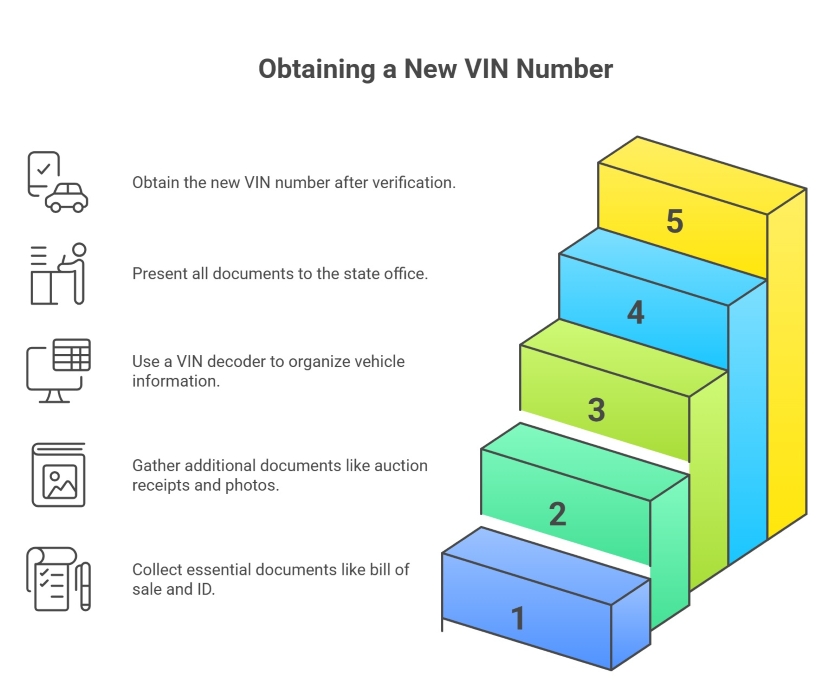
No office will issue a number on a verbal story. The state needs evidence that you own the car, that the marker is gone, and that the request is legitimate. If you are searching for how to get a new VIN number, take complete documentation. Bring proof that links the file, and make sure ownership is clear.
Start with the basic file:
- Title or bill of sale
- Government-issued ID
- Police report if the case is theft-related
- VIN inspector's written statement
- Current registration or last known registration
- Insurance documentation
Then bring supporting records to strengthen your case:
- Auction purchase receipt
- Insurance total loss letter
- Photographs of all VIN locations
- Secondary identifier documentation, such as engine stamp or door jamb sticker
- Lien release if applicable
A VIN decoder or lookup tool can help you organize trim, engine size, and model-year data before the visit. However, as the California Department of Motor Vehicles highlights, state verification is still needed.
Step-by-Step State-Assigned VIN Process
The process is formal because the state protects title integrity. In Texas, the owner must submit title evidence, a law enforcement form, and a small fee. Forms vary depending on your location, so contact your local DMV first.
Here is the normal procedure:
- Gather title, bills of sale, insurer letters, and prior records.
- Schedule the required inspection with the assigned state office.
- Bring the vehicle for a physical inspection so officials can verify tags and hidden marks.
- Submit your application, ID, and photos. Attach any police or insurer records.
- Wait while the state checks for liens, theft alerts, fraud, and conflicting or duplicate VINs.
- Receive either a reassigned prior identifier or a state-issued plate or sticker.
- Update title, insurance, and state records so every file matches.
Full VIN Change Fee Breakdown by Path
There is no national flat fee for a VIN number replacement. One state may charge almost nothing for the assigned number, but most cost comes from title work, towing, tax, review, or bond premiums. The plate fee can be tiny, but the full legal path is not, especially when the VIN number for a car has title problems.
|
Path |
Upfront Cost |
Processing Timeline |
Best For |
Hidden/Additional Costs |
|
Theft recovery reassignment |
$50–$250 |
2–8 weeks |
Car returned after plate removal or tamper damage |
Towing, release fees, storage |
|
Fire or flood identity loss |
$75–$300 |
2–6 weeks |
Unreadable dash tag or body stamp |
Photos, second review, insurer letters |
|
Salvage/repair route |
$150–$500 |
3–10 weeks |
Total loss repair with identity questions |
Title fees, taxes, extra checks |
|
Bonded title plus assignment |
$200–$800 |
4–12 weeks |
Weak title file that is not fraudulent |
Bond premium, appraisal, county fees |
|
Texas direct assignment/reassignment |
$2 plus title and filing fees |
1–6 weeks |
Clear title file and completed law enforcement form |
County fees and related checks |
The Texas Department of Motor Vehicles lists a $2 fee for an assigned or reassigned number, separate from title and filing costs.
What Happens to Your Title When a VIN Is Reassigned?
When a state approves a reassignment, the title changes with it. The state may carry the old identity into a corrected title or issue a title tied to the state number, often with a rebuilt note.
According to the Attorney General of Texas, that change does not clean the file. A VIN may move to a new title record, but prior loss history or title questions can still stay attached. Before buying, request the full reassignment paperwork and verify the original state's title record directly.
How to Spot VIN Cloning and Title Washing
Look for mismatched numbers and letters. A fake VIN number often comes with rushed paperwork, a fresh plate, or an unclear origin story. If records jump across states without a believable reason, treat the deal as possible fraud. Cloners steal tags, steal paper identities, and try to steal clean titles. Run the VIN through at least two independent sources and compare results: discrepancies in title history, ownership count, or odometer readings across databases are a stronger signal than any single red flag on its own.
Odometer Rollback and VIN Reassignment
A lawful VIN replacement does not reset mileage duties. The seller still has to report the correct mileage, and an odometer rollback can create a second fraud problem. State consumer offices warn buyers to compare the title statement and service records before they buy or repair.
What a Dealer Should Do When VIN Numbers Don't Match
A dealer cannot ignore a mismatch. If the dashboard tag, title, or plate does not line up with the rest of the vehicle VIN, the car should come off the lot immediately. The risk can involve stolen cars, hidden damage history, unpaid liens, and evidence of tampering. The seller still has to verify the VIN. A vehicle history report is one layer.
The safest response is this:
- Stop the sale and hold the vehicle off-market
- Compare the title, VIN number on a car, door label, frame stamp, and any license plate records
- Run a history lookup and save the result
- Contact law enforcement or the assigned agency if anything looks altered
- Do not advertise the VIN number for a car as clean until the file is resolved in writing
In its 2024 annual report, the NICB states that it inspected 7,306 vehicles in 2024. The agency handled more than 110,000 information requests tied to theft and identity work.
What to Do If You're Already Driving a Car With an Altered VIN

Do not ignore it. A bad tag can lead to refused title work, insurance trouble, or a criminal case. Freeze the paper trail and let the state review the vehicle VIN before any sale or transfer. If you need to get a new VIN number, full disclosure matters most for vehicle owners.
Take these steps:
- Stop any sale, trade, or export activity.
- Gather the title, bill of sale, insurer letters, and service records.
- Ask what form starts the VIN tag replacement legal process in your state.
- Arrange an inspection and explain when you found the alteration.
- Notify your insurer and lender if the vehicle's VIN does not match the paper file.
- Keep copies of everything. Don't drill, polish, or move the tag yourself.
Key Takeaways
- A state-assigned VIN is the only legal path to a VIN replacement.
- The main triggers are destruction, theft, and repair.
- Federal law makes private tag swaps and unauthorized changes unlawful.
- The state first tries to preserve the prior identifier before it creates a new one.
- Clean records, good documentation, and honest disclosure make approval easier.
- Dealers and potential buyers should double-check tags, marks, title data, and history files.
Frequently Asked Questions
Does Replacing a Car Frame Always Require a New VIN?
No. If the state can still verify the original VIN through the frame, title file, or maker records, it may keep that identity.
Can a Vehicle History Report Show That a VIN Was Previously Changed?
Sometimes. It may show title corrections, theft recovery notes, or branding, but some changes appear only in state files.
What Happens to a Car's VIN If It's Exported to Another Country?
The original identifier usually stays with the car. However, the destination country may require local labeling or customs review.
Is It Possible to Get a Bonded Title and a New VIN at the Same Time?
Yes. In some states, incomplete title evidence and identity review can move together.
Can I Get a Replacement VIN for a Car I Built from Scratch?
Yes, if your state titles specially constructed motor vehicles. You usually need parts receipts, title evidence, and inspection first.