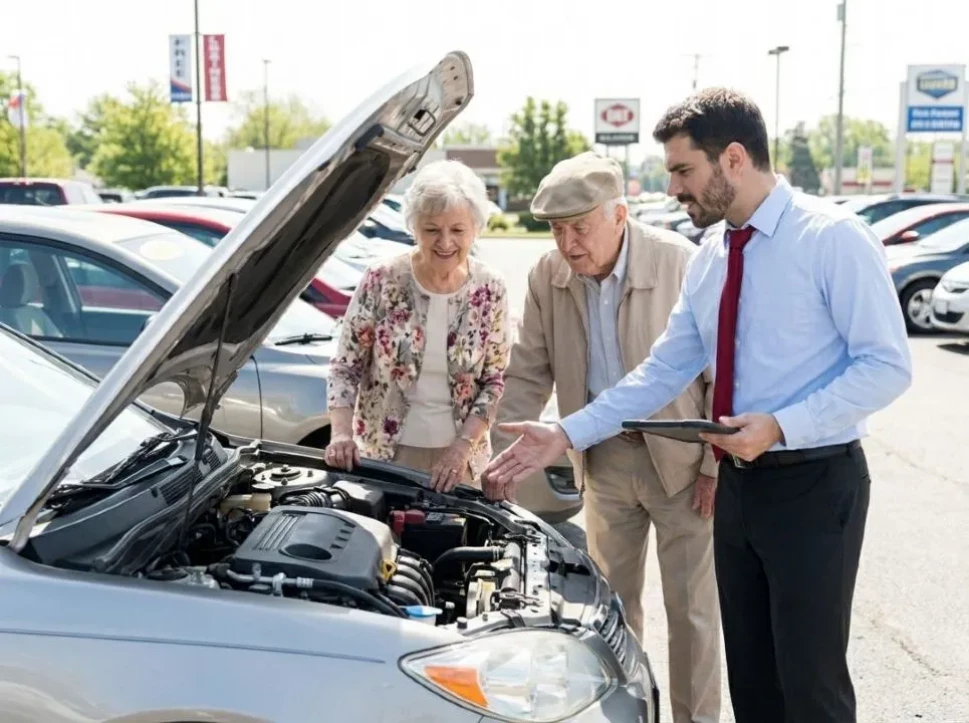
Buying a car "as is" means the seller generally isn't responsible for repairs after the sale, so you're accepting most mechanical and legal risks once you sign the contract. An "as is" used car can still be a smart purchase if the discount exceeds the total cost of likely repairs, inspection, insurance, and future resale loss.
What Does "As-Is" Mean When Buying a Car?
This type of sale means the seller offers the vehicle in its current condition. When learning how to buy a used car, this is one of the most important contract terms to understand. It usually means the buyer accepts visible and unknown problems unless another written promise says otherwise. In a dealership setting, the Buyers Guide and purchase agreement matter more than verbal statements.
Before signing, read the wording closely because these details decide risk:
- The car is sold as is, so post-sale repair bills usually belong to you.
- The offer may be without a warranty, unless a written limited warranty is included.
- If the seller made false statements while the law requires a specific disclosure.
- The bill of sale should match the title, odometer statement, and price.
"As Is" vs. Salvage Title vs. Rebuilt Title
These terms are often confused together. However, they describe different risks. As-is is a sale condition. Salvage and rebuilt are title brands tied to the vehicle’s past. A clean-title vehicle can still be sold as-is. A salvage vehicle can be repaired and later sold. Review the differences below:
|
Term |
What It Means |
Main Risk |
What the Buyer Should Verify |
|
As-is sale |
Post-sale promises are limited |
Unknown defects later |
Contract, Buyers Guide, inspection results |
|
Salvage title |
The car was marked as heavily damaged |
Structural, flood, or safety issues |
Damage photos, title brand, repair invoices |
|
Rebuilt title |
A salvage vehicle was repaired and approved |
Quality of the repair may vary |
State inspection, alignment, airbags, frame work |
|
Clean title |
No title brand shown |
Hidden history |
History report, service records, physical inspection |
What Can Dealers Disclose and Hide About the Car's Condition?
Dealers can disclose defects or damage. They may also sell a rough vehicle if the paperwork is honest. Dealers cannot misrepresent material facts or use paperwork that conflicts with consumer protection rules.
Some issues may be unknown to the dealership, especially if the auction file was thin or the trade-in was never fully diagnosed. Still, written details should be specific, not vague. “Runs good” should not outweigh written warnings, title brands, or inspection notes.
What Are the Most Common Defects and How Often Do They Appear?
The hardest defects are not always the biggest ones. They hide during a short test drive or look normal until a technician lifts the car. When buying a used car as is from a dealer, assume the shiny areas were cleaned first. A deeper damage assessment should focus on costly, safety-related systems.
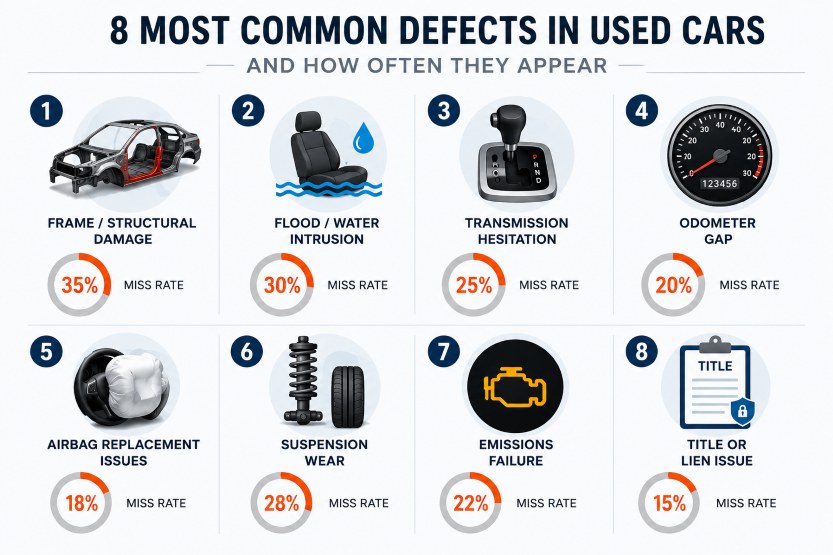
Use this checklist before trusting the discount:
- Frame or structural damage | 35% miss rate | Undercoating, replaced panels, and poor gaps can hide collision work.
- Flood or water intrusion | 30% miss rate | Deodorizer and clean carpets can hide corrosion under seats.
- Transmission hesitation | 25% miss rate | A cold test drive may not reveal hot slipping.
- Odometer gap | 20% miss rate | Mileage looks normal until records are compared.
- Airbag replacement issues | 18% miss rate | Lights may be cleared while modules hide behind trim.
- Suspension wear | 28% miss rate | Noise can vanish on smooth roads.
- Emissions failure | 22% miss rate | Cleared lights may return after monitors reset.
- Title or lien issue | 15% miss rate | Paperwork can create registration complications.
The National Highway Traffic Safety Administration (NHTSA) estimates that more than 450,000 vehicles are sold each year with false odometer readings.
Is the "As Is" Discount Worth the Repair Risk?
The discount is worth it only when the likely costs, taxes, legal fees, and resale loss still leave savings. A $2,000 discount disappears fast if tires, brakes, suspension, and sensors need work. Include towing and diagnostic time. Price the risk before signing.
How a Pre-Purchase Inspection Changes the Entire Calculation
A pre-purchase inspection turns uncertainty into a budget. It cannot make a risky car safe. However, it separates normal wear from expensive trouble. Ask an independent mechanic to inspect the vehicle. The current owner may refuse; treat that refusal as pricing information.
A good inspection should cover:
- Scan all modules.
- Check frame rails, welds, paint, and panel alignment.
- Measure brakes, tire age, and suspension play.
- Look for leaks.
- Confirm airbags, seatbelts, sensors, and warning lights.
- Test drive the vehicle in person.
- Compare findings with claims and paperwork.
What to Check Before Buying an As-Is Vehicle
Run the VIN through a VIN decoder. Confirm the title and mileage data. Get the vehicle inspected. When purchasing a used vehicle, also verify liens and title transfers. Before spending money on an inspection, compare the VIN on the dashboard, driver's door, and title to make sure they all match. Look for title brands such as salvage, rebuilt, or flood, and confirm there are no active liens that could delay registration.
How to Read a Vehicle History Report Specifically for "As Is" Red Flags
Treat the vehicle history report as a decision map. VinGurus helps by organizing title records, mileage events, accident signals, auction data, and ownership history. Thus, you are not relying on a seller’s short story.
Look at each section with a buying decision in mind:
- Title history: A brand can mean lower resale value, harder financing, and insurance questions.
- Accident entries: Minor damage differs from airbag deployment, tow-away records, or repeated claims.
- Mileage timeline: Large jumps or duplicate entries support mileage concerns.
- Ownership pattern: Fast flips or auction transfers may signal unresolved issues.
- Service records: Regular maintenance helps; long silence before sale deserves caution.
- Recall data: Open recalls may delay safe use.
- Auction or damage photos: Current listing photos may hide past flood, roof, frame, or front-end damage.
For as-is vehicle sales, VinGurus connects scattered clues to one practical algorithm. It is as follows: buy, renegotiate, or leave.
Questions to Ask the Dealer Before You Walk the Lot

Good questions save time before you fall in love with the paint. Ask before the test drive, and compare every answer with the paperwork. A trustworthy car dealer should not dislike basic verification. If the answer changes later, slow down the car purchase.
Start with these questions:
- Is any written warranty included?
- Does your dealership offer warranties on this model?
- Can I take it for an independent inspection before signing?
- Is there any accident or auction sale?
- Are there any open recalls, title brands, liens, or emissions issues?
- Which fees are mandatory?
- Can I review the Buyers Guide and contract?
- What to do when buying a used car if the inspection finds a major defect?
Documents Every Buyer Should Request Before Signing
Paperwork is not a formality. It decides ownership, taxes, financing, and your legal recourse if something goes wrong. Used car buyers should request copies early. Read them away from the sales desk. If documents do not match, stop the buying experience until the mismatch is explained.
Request these documents before payment:
- Title or title application: Confirms ownership and brands.
- Buyers Guide: Shows as-is terms, implied warranties, or coverage.
- Sales contract: Lists price, fees, and extras.
- Odometer statement: Confirms mileage.
- Inspection report: Shows shop findings.
- Emissions or safety certificate: Needed in certain states.
- Lien release: Clears prior lender claims.
- Service records: Support maintenance claims.
- Recall printout: Shows unresolved safety work.
- Temporary tag paperwork: Avoids title delays.
How "As Is" Affects Resale, Insurance, and Registration
As-is terms can follow you financially after the sale. When shopping for a used car, a cheap purchase can become a slow resale if records are thin or defects are obvious. This is where used car depreciation becomes personal: the market discounts uncertainty. Insurers and DMVs care less about your discount and more about title status, safety, and documentation.
|
Area |
Possible Effect |
Why It Matters |
|
Resale |
Lower offers from private buyers and dealers |
Future shoppers also fear hidden defects |
|
Insurance |
Limited comprehensive or collision options on branded vehicles |
Some insurers avoid high-risk histories |
|
Registration |
Extra inspections, emissions checks, or title review |
State rules vary by state |
|
Financing |
Higher rates or denial on certain title brands |
Lenders protect collateral value |
|
Repairs |
Higher future repair burden |
Unfixed defects reduce reliability |
VinGurus helps before and after purchase because it gives you a record-based view of the vehicle’s story. In the used car market, that clarity can support a better negotiation.
Title Transfer Challenges with As-Is Vehicles
Title transfer is where a cheap deal can become stressful. A car may drive fine. However, it may still be difficult to register. A branded title on a car can trigger extra forms or insurer questions. As-is doesn’t erase paperwork duties. Private sales can be harder when the seller is unprepared.
Watch for these title transfer problems:
- Seller name does not match the title.
- The title is signed incorrectly or has cross-outs.
- There is an unreleased lien.
- Salvage, rebuilt, flood, or odometer brand is unexplained.
- Out-of-state paperwork needs DMV review.
- Emissions or safety inspection documents are missing.
- The seller promises a replacement title “later.”
- Taxes, registration fees, or legal costs reduce the value of the deal.
Can Lemon Laws Protect an "As Is" Purchase?
Usually, lemon laws focus on new cars or vehicles still covered by a manufacturer's warranty. However, coverage can vary by state. Some states give extra rights for specific vehicle purchases. Understand your rights before signing. Law firms often see weak claims after an as-is purchase involving a lemon car.
For example, New York has a Used Car Lemon Law that requires dealers to provide a limited warranty for many qualifying used vehicles based on their age and mileage. Massachusetts allows buyers to seek remedies if a dealer fails to disclose defects that affect safety or prevent the vehicle from passing a state inspection. By contrast, states such as Texas provide much more limited protection for "As Is" purchases.
The Federal Trade Commission (FTC) penalties for Used Car Rule violations can reach $53,088 per violation.
Key Takeaways
- An as-is discount is real only if it exceeds repair, title, insurance, and resale risk.
- As-is is a contract term; salvage and rebuilt are title conditions.
- Paperwork matters more than verbal promises at dealerships.
- Always inspect, scan, and road-test when you’re buying a used vehicle.
- Use records to connect title, mileage, damage, ownership, and recall clues.
- Walk away if the seller blocks inspection/hides documents.
An as-is vehicle can be a reliable car. However, all numbers, records, and inspections should agree.
Frequently Asked Questions
Can a Dealer Cancel an As-Is Sale After the Paperwork Is Signed?
Usually, no. Otherwise, the contract should allow cancellation, financing should not fail under written terms, fraud should not be discovered, or state rules should allow it. Read the delivery and financing clauses carefully.
Does Buying from a Private Seller Affect Lemon Law Eligibility?
Yes. Lemon law coverage often excludes private seller deals and many older vehicles. Some fraud or title remedies may remain. However, consumer protection options are usually narrower.
Do Emissions or Safety Inspection Failures Change an As-Is Sale?
They can. If state rules require a valid inspection or emissions pass before sale or registration, failure may block registration.
Does Buying "As Is" Affect Future Warranty Claims from the Manufacturer?
Not usually. An as-is dealer sale does not cancel an active manufacturer warranty. Coverage depends on time, maintenance records, and prior damage.
What Should I Do If the Seller Refuses a Pre-Purchase Inspection?
Walk away. Alternatively, demand a much larger discount. Refusal suggests the seller fears what a professional inspection may reveal.